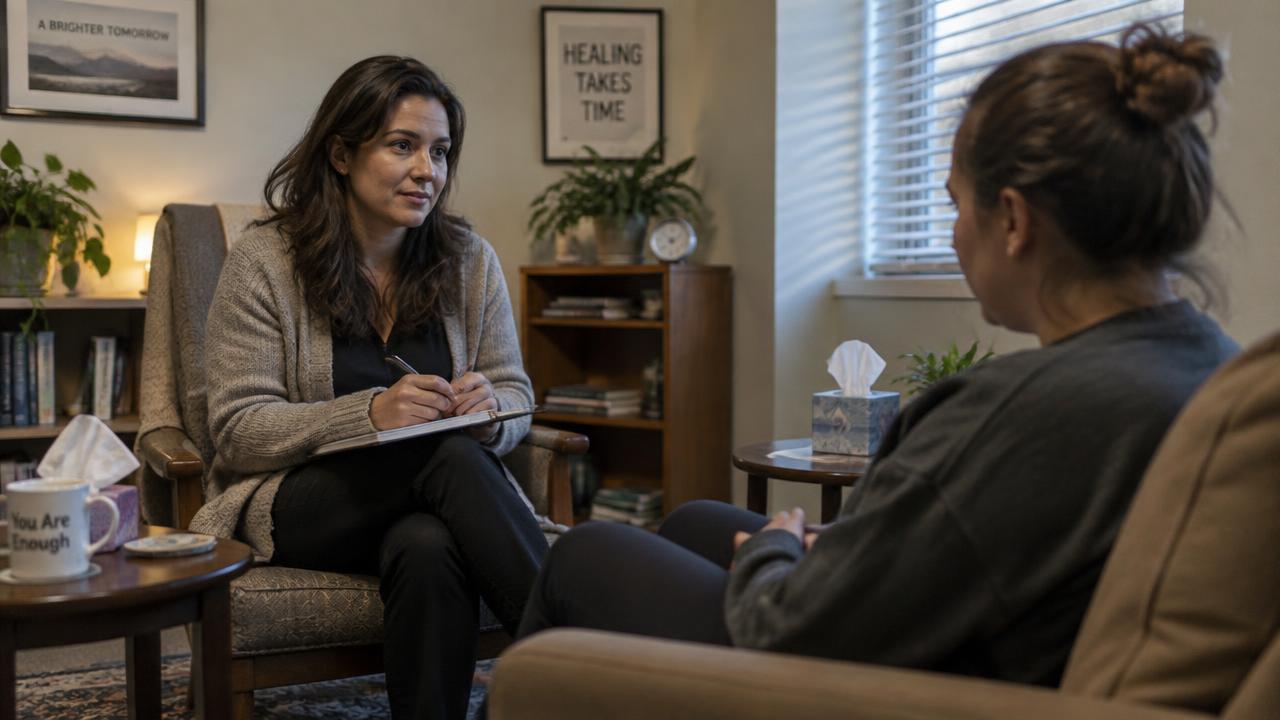
Spanish for Mental Health Professionals: A Clinician's Phrase Guide
A clinician-focused guide to the Spanish phrases that matter most in mental health visits — opening the session, screening for depression and suicide risk, discussing trauma, and closing safely — written for therapists, psychiatrists, and counselors who see Spanish-speaking patients.
Mental health visits live or die on language. A missed nuance during a depression screen, a clumsy translation of "self-harm," or a culturally tone-deaf opening can quietly shut a Latino patient down for the rest of the session — and often for the rest of the therapeutic relationship.
This guide focuses on the Spanish phrases mental health clinicians actually need: building rapport, assessing mood and risk, talking about trauma without retraumatizing, and ending the session with a safe, clear plan. It is written for therapists, psychiatrists, psychologists, social workers, and counselors who already know clinical interviewing — you just need the words.
Why Medical Spanish for mental health is different
General Medical Spanish curricula are built around physical complaints — pain, fever, medication. Mental health Spanish requires a different register: softer verbs, more indirect phrasing, and an awareness that words like "loco," "deprimido," and "nervios" carry cultural weight that does not map cleanly onto English equivalents.
In many Latino communities, emotional distress is first described somatically ("me duele el pecho," "siento un peso en el cuerpo") rather than psychologically. Your opening questions need to leave room for that.
Opening the session and building rapport (6 phrases)
- "Gracias por venir hoy. ¿Cómo prefiere que le llame?" — Thank you for coming today. What would you like me to call you?
- "Todo lo que hablemos aquí es confidencial." — Everything we talk about here is confidential.
- "No hay respuestas correctas o incorrectas." — There are no right or wrong answers.
- "Tómese su tiempo." — Take your time.
- "¿Cómo se ha sentido en las últimas semanas?" — How have you been feeling in the past few weeks?
- "¿Qué le trae hoy aquí?" — What brings you here today?
Assessing mood and depression (7 phrases)
- "¿Ha sentido tristeza o desesperanza últimamente?" — Have you felt sad or hopeless recently?
- "¿Ha perdido el interés en cosas que antes disfrutaba?" — Have you lost interest in things you used to enjoy?
- "¿Cómo está durmiendo?" — How are you sleeping?
- "¿Ha notado cambios en su apetito o peso?" — Have you noticed changes in your appetite or weight?
- "¿Se siente cansado todo el tiempo, aunque descanse?" — Do you feel tired all the time, even when you rest?
- "¿Tiene dificultad para concentrarse?" — Are you having trouble concentrating?
- "¿Se siente culpable o que no vale nada?" — Do you feel guilty or worthless?
Anxiety, panic, and somatic symptoms (5 phrases)
- "¿Se siente nervioso o preocupado la mayor parte del tiempo?" — Do you feel nervous or worried most of the time?
- "¿Ha tenido ataques de pánico — momentos de miedo intenso de repente?" — Have you had panic attacks — moments of sudden intense fear?
- "¿Siente el corazón acelerado, falta de aire, o presión en el pecho?" — Do you feel a racing heart, shortness of breath, or chest tightness?
- "A veces el estrés se siente en el cuerpo. ¿Le pasa eso?" — Sometimes stress shows up in the body. Does that happen to you?
- "¿Hay algo que le hace sentir más tranquilo?" — Is there anything that helps you feel calmer?
Suicide and self-harm screening (5 phrases — say them directly)
Indirect translations here are dangerous. Use clear, unambiguous Spanish; clinical evidence shows direct questions do not increase risk.
- "A veces, cuando una persona se siente así, piensa en hacerse daño. ¿Le ha pasado a usted?" — Sometimes when a person feels this way, they think about hurting themselves. Has that happened to you?
- "¿Ha pensado en quitarse la vida?" — Have you thought about taking your own life?
- "¿Tiene un plan?" — Do you have a plan?
- "¿Tiene acceso a armas o medicamentos en casa?" — Do you have access to firearms or medications at home?
- "¿Hay alguien con quien se sienta seguro esta noche?" — Is there someone you feel safe with tonight?
Trauma-sensitive phrasing (5 phrases)
- "Usted decide cuánto quiere compartir hoy." — You decide how much you want to share today.
- "Si algo se vuelve muy difícil, podemos parar." — If something becomes too hard, we can stop.
- "Lo que le pasó no fue su culpa." — What happened to you was not your fault.
- "Es normal sentir muchas emociones a la vez." — It is normal to feel many emotions at once.
- "¿Se siente seguro en su casa ahora?" — Do you feel safe at home right now?
Cultural context: nervios, susto, and family
Many Spanish-speaking patients describe distress using cultural idioms — "ataque de nervios," "susto," "mal de ojo." These are not symptoms to correct; they are legitimate frameworks. Acknowledge them ("entiendo, eso suena muy difícil") before introducing clinical terms.
Family ("la familia") is often central to the patient's understanding of wellness. Ask "¿Su familia sabe que está aquí?" and "¿Qué piensa su familia de cómo se siente?" — the answers shape what kind of treatment plan will actually work.
Closing the session and safety planning (5 phrases)
- "Gracias por confiar en mí hoy." — Thank you for trusting me today.
- "Vamos a hacer un plan juntos." — Let us make a plan together.
- "Si se siente en crisis, llame al 988 — hay ayuda en español." — If you feel in crisis, call 988 — help is available in Spanish.
- "La próxima cita es el [fecha]." — Your next appointment is on [date].
- "Está haciendo algo muy valiente al venir aquí." — You are doing something very brave by coming here.
Building real fluency for mental health visits
A phrase list gets you started; conversational fluency comes from hearing these phrases spoken at natural speed, practicing your own pronunciation, and rehearsing patient-style responses before you are in the room. Our Medical Spanish CME course includes behavioral-health dialogue practice with native-speaker audio, pronunciation feedback, and AAFP-accredited credit for psychiatrists, psychologists, social workers, and counselors.
If you are not sure where to start, the free assessment will place you at the right level and recommend the modules most relevant to mental health practice.
Earn CME credits while you learn
Our AAFP-accredited online medical Spanish course awards 38.25 CME credits across 51 modules. Earn 0.75 credits per module, on your schedule.
Get a free Medical Spanish word and phrase each week
One short email. Clinical vocabulary you can use the same day. Unsubscribe any time.